Showing posts with label Emergency management. Show all posts

Not Ready for Prime Time (viewer discretion advised)

by Marc Goldwich

I was reviewing the headlines this morning which were chock full of mayhem.  Everything from the aftermath of catastrophic flooding which resulted in numerous drowning deaths in the South Carolina, to more school shootings, along with a smattering of auto-related fatalities vied for my attention. This combined with Halloween being just around the corner was enough to cause my mind to entertain the dark side of life. So I began thinking about the job of cleaning up after a catastrophe.

Image from commons.wikimedia.org
In case you're not aware, there is an entire industry set up for handling these kinds of events. Typically called “Biohazard Clean-up” or “Crime Scene Clean-up”, these companies are e an offshoot of emergency restoration companies. Whether the hazard you need gone consists of  toxic waste, deadly mold, body fluids or most any other kind of nasty stuff that crop up after an emergency, there are trained professionals who are only too happy to roll up their sleeves and dive right in. 

The hit Discovery TV show “Dirty Jobs” is a favorite of mine, but I doubt you will ever see Mike Rowe tackling this type of job. While certainly “dirty” enough, my guess is it would simply be too disrespectful to find any humor in this line of work, and for his show, humor plays a major role.

There are other shows which depict and deal with death, usually CSI or homicide, but I have never seen one address the clean-up aspect that invariably needs to take place after the police finish their investigation. Since you can now watch shows on just about any occupation imaginable, I would not be surprised to find a show following biohazard clean-up teams around.

So what would that entail? First let’s think about the types of situations these companies and their crews might deal with. Things like:
-          Sewage backups
From commons.wikimedia.org
-          Crime scene residue
-          Suicide
-          Homicide cleanup
-          Blood cleanup
-          Accidental death cleanup
-          MRSA and H1N1 decontamination
-          Hoarding scenes
-          Animal waste/remains
-          Chemical spills
-          Tear gas cleanup
-          Meth lab cleanup
-       Radiological hazards
    
None of these events should be taken lightly, or undertaken by anyone except certified biohazard professionals. Not that most people would want to deal with any of these problems
.
These companies need to be well versed in applicable state and federal regulations, they need to be licensed and certified (where required), they need to use appropriate transportation and/or disposal protocols, and they may need to be registered with the states’ Department of Health. These companies can also expect to be regulated by governing and advisory bodies such as OSHA (Occupational Safety and Health Administration), NIOSH (National Institute for Occupational Safety and Health), DOT (Department of Transportation), and EPA (Environmental Protection Agency).

Image courtesy of townhall.com
The dirty work of these professionals usually begins when the coroner’s office, or other governmental entity officially releases the scene to the property owner or other responsible party. Depending on the type and severity of the “event”, the clean-up teams are required to wear protective clothing, may seal off rooms to prevent or minimize the spread of airborne or physical elements of the bio-hazard scene, and follow specified methods and practices to decontaminate such scenes.

The scenes must be meticulously cleaned of all harmful material, which typically includes the removal of any porous materials (whether personal belongings like clothing and sheets, or building materials such as carpeting, wood subfloor, or drywall) – which must all be properly disposed of, and then sanitized. You can only imagine the mess that will be left, even after the mess that was the biohazard is removed.

And many people are so distraught after dealing with such a loss, that they overlook the fact that insurance may cover the expense of the clean-up efforts. Just remember this rule of thumb, if property is damaged as a result, it is probably covered by insurance (either yours, or someone else’s).
ServPro.com provided the following bio-hazard and sewage emergency tips:

After any biohazard or sewage contamination in your home or business, your primary focus should be safety:

-          Is it safe to stay in the house?
-          Exposure to biological and chemical contaminants can pose serious health consequences.
-          Flood water can contain sewage, pesticides, and other contaminants.
-          Only do activities that are safe for you to perform.
Image courtesy of aftermath.com

What to Do After a Contamination
-          Stay out of affected areas.
-          Call emergency service personnel if the situation is life-threatening.
-          Treat all bodily fluids as if they are contaminated.
-          Turn off the HVAC system if there is sewage damage.

What Not to Do After a Contamination
-          Don’t leave wet fabrics in place. Hang furs and leather goods.
-          Don’t leave books, magazines, or other colored items on wet carpet or floors.
-          Don’t use your household vacuum to remove water.
-          Don’t use television or other household appliances.
-          Don’t turn on ceiling fixtures if ceiling is wet, and keep out of rooms where ceilings are sagging.

Let’s all hope we never need these tips, but as we can plainly see from watching the news, the fact is, biohazard clean-up is a grim reality for many families. As with anything else, the more you know in advance of an emergency, the better equipped you will be in handling that situation.

In this article I discussed the subject of biohazard clean-up, and the professionals that are trained to perform what just might be the dirtiest job of all. I mentioned some of the types of events this might involve, and included tips for dealing with such an event.

Mark Goldwich is president of Gold Star Adjusters, a group of public insurance adjusters dedicated to helping citizens get the maximum settlement for any insurance claim.   

The Pope, An Immigrant, and Donald Trump walk into a bar…

by Mark Goldwich

Just kidding – the point is, no matter what your job is, it is important to be current when
broadcasting to the “masses”. (pun intended)
Image courtesy of pinterest.com

Each of us has a wealth of information, based on personal and professional experiences, formal and informal education, books read, seminars attended, and so on. So while we can speak about any number of subjects, I am often reminded that the best topics to talk about are those that are most current, or in today’s lingo, what is “trending”.

For me, being in the insurance industry, I could look to local items, like:
Just this week there was a news story and article on www.FloridaWaterDaily.com titled, “Jacksonville Budget Amendment Transfers Money from Drainage Project to Firefighters”. In the article, it talked about people with localized flooding issues caused by recent heavy rainstorms, who are upset because “A last-minute amendment passed on Monday that took money away from storm drainage to help restore the salaries of Jacksonville firefighters. The amendment passed on Monday takes about $300,000 from the drainage fund and puts it towards restoring the salaries of Jacksonville firefighters.” These residents are not against firefighters, but they pay taxes that include storm water fees, and they are tired of having to wear rubber boots every day just to walk outside their home.

Image courtesy of commons.wikimedia.org
Earlier this month I saw a story on www.news4jax.com about a fire that broke out in the kitchen of a local McDonalds restaurant at 3 a.m. Similar fires damage homes and businesses daily, and each one details the need not only for insurance, but prevention, maintenance, and fire suppression.

You can also find countless stories about local insurance agencies, insurance companies, jobs in the insurance field, or stories about insurance benefits for local city government employees and officials.

You could then easily expand your search for recent events on a statewide level, and for example, find a story about famed coach Lou Holtz, whose Orlando area home was heavily damaged by fire, along with personal items like photographs with presidents and popes, the torch he carried in the 1996 Olympic games in Atlanta, and so much more.

There has also been plenty of severe weather all across the state recently, damaging homes, businesses and cars. A www.weather.com article earlier this year posted the following events which all occurred on the same day in Florida:

-          Storms brought down trees and knocked out a few traffic signals in St. Petersburg, Florida.

-          Throughout Tallahassee, Florida, reports popped up of trees blocking roadways and damaging homes after a storm struck around 10:30 a.m.

-          A National Weather Service employee spotted a funnel cloud in Miami early this afternoon.      Another funnel cloud was reported by a trained spotter in Boynton Beach, Florida, at 4:20 p.m.

Widening the search to regional or national levels, and again for international news on industry or related topics would only yield more current events to investigate, discuss, and opine upon.

Once I find a current topic I want to discuss, I always try to find a way to add my own personality to the subject, whether by comparing it to an actual situation that has occurred in my business, or by giving my own position on the topic. I also want to give the reader something else to think about, in addition to what is being reported on. After all, every story would be different depending on the background or point of view of the reporter.

Most news stories aren’t going to go into all facets of the event. Take a simple story about a home fire, for instance. I could talk about the importance of getting the right insurance policy, or documenting your valuables so you can prove your claim later, or presenting your claim to the insurance company, or even fighting to maximize your claim, and much more. Someone else could talk about restoration methods, new construction materials, fire suppression equipment, smart-home wiring, using LEED-certified products in the reconstruction – the potential list of alternative topics using just this one scenario is absolutely endless.

Fill out the form below to receive a Free Copy.

In this article I talked about writing articles that are current. Even though I am relatively new to writing my own articles, I have learned enough to use timely material, based on relevant topics, and inject my personality, to create a product people can not only learn from, but enjoy (hopefully). After all, I’m not a writer; I’m just an insurance adjuster, who owns a small business, and writes about it.

 Mark Goldwich is president of Gold Star Adjusters, a group of public insurance adjusters dedicated to helping citizens get the maximum settlement for any insurance claim.   


What Are the Odds?

by Mark Goldwich

If one thing is for certain, it is that there are no guarantees in life. Or, as other people have said, the only sure things in life are death and taxes. I never did agree with the taxes part of that statement, since you can choose jail (or death) over paying taxes.

Anyway, now that I started thinking about death, a concept I’m not at all fond of, I wanted to look at the ways people die, and how they can avoid that, or at least put it off for a while. So I got on the National Safety Council website (www.nsc.org) and found an article titled “What are the odds of dying from…”

To me, this is good information to have for a few reasons. One, if you know the most likely ways you are going to die, you can then learn some steps to help you beat the odds. Also, if you know the least likely ways you are going to die, you can ease your mind a bit when it comes to worrying about dying in a particularly nasty, but highly unlikely way.

For example, the NSC showed Heart Disease and Cancer led the way towards death with 1 in 7 odds. So, if you do just a little research, you can take some pretty easy steps to greatly reduce your odds. Stop (or never start) smoking, exercise regularly, maintain a healthy diet and weight, and see your doctor.

Image courtesy of wikipedia.org
On the other end of the spectrum, dying from a lightning strike came in last with the odds of 1 in 164,968. Now, I was not thinking of this the other day when I was playing catch in the front yard with my son, under a tree, with lightning cracking nearby. If I did, even though the odds are not high, I would have gone into the house even sooner than I did. Still, there are many other ways to die, but I'm not going to list all the odds. What I will do is give you a few, with some thoughts on how you can reduce your risk. 

Did you know the odds of dying in a motor vehicle crash are 1 in 112? That’s worse than I thought it would be, making me glad I always wear a seatbelt.  Other than that, I could really stand to be more careful when I drive (no texting, no speeding, no aggressive lane changes). Besides improving my life span, good driving habits can save me money on insurance premiums.

Does knowing the odds of death by firearms discharge are 1 in 6,699 make you feel better? This one is tricky, because many of these deaths are caused by the person’s own gun, which means not owning a gun would better your odds. Then again, as a gun owner, I would recommend you take a firearm safety course, use a trigger lock, and take extra care whenever handling or cleaning a gun. After all, the answer to avoid dying in a car accident would be to never drive or ride in a car. This notion highlights the difference between “possible” and “realistic”.

How about choking to death from eating food? The odds of this are listed as 1 in 3,375. As someone that has used the Heimlich Maneuver twice on my own daughter before her 7th birthday, may I suggest being careful to cut food into pieces too small to choke on, not putting too much food in your mouth at one time, and chewing food well before swallowing. And parents, please particularly watch out for hard candies with your kids. My daughter’s first choking “incident” was on a Life Saver – how ironic!

Receive your FREE copy by filling out the form below.

Most people have a fear of dying in a plane crash, much more so than dying in a car crash, but when you consider the odds of dying in a car vs. a plane are 1 in 112 vs. 1 in 8,015, I’ll take that plane ride any day of the week. I recall someone asking me why I would jump out of a perfectly good airplane (back in the day when I would skydive for fun on weekends). Even then, without knowing the odds, I would always say, “there is no such thing as a perfectly good airplane” meaning, all planes seem perfectly good, right up to the time they crash. The fact is, skydivers are much more likely to die on the car ride to or from their jump site, or when the plane they are to jump from crashes (this takes out the whole group of jumpers, not just the one that might die during the jump).


Insurance is a system by which financial risk is avoided or reduced by transferring the cost of that risk to another. The event may still happen, but your financial risk is reduced or eliminated. Similarly, taking extra precautions reduces your risk of accidents, and in the case of accidents, it is not just money you are trying to save, it is your health, or even your life. 

Mark Goldwich is president of Gold Star Adjusters, a group of public insurance adjusters dedicated to helping citizens get the maximum settlement for any insurance claim.  

Fires & Rainstorms & Floods, Oh My!

by Mark Goldwich

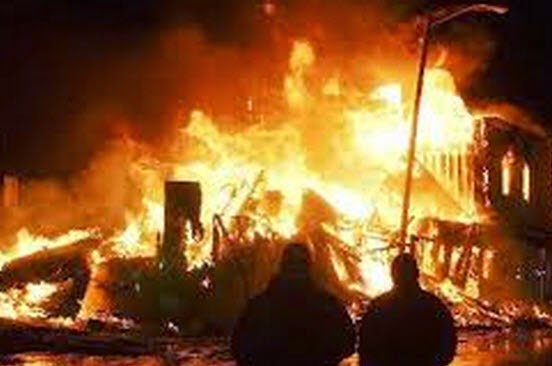
The fire, flood, hurricane or tornado that descends on a community is one kind of disaster that’s easy for the victim to recognize as such. Even an isolated event, like a pipe leak or a theft can be disastrous to a business or homeowner. The difference is those kinds of disasters are easy to recognize as such and most people realize that they must be prepared for them.

What happens to the people who then try to secure the insurance compensation they’re entitled to is, all too often, another kind of disaster. And it’s that second disaster that nobody is expecting. Literally millions of people have been victimized by the second kind of disaster after having endured the first kind. The saddest thing about it is this: most victims of the second type of disaster do not even realize that this disaster has taken place.

Think about it. If you don’t know what is covered and why it’s covered ... or how to identify and estimate all the damages you’ve sustained … or how to determine what you should actually get paid … how would you know whether the insurance company was holding back when it came to compensating you fully for valid claims?

Even if you were to figure out the insurance company was, through error, oversight, or any other reason, not paying you all it should … you would still have to convince the insurance company that you were right and they were wrong. That is not something they are particularly fond of admitting.

If you believe, as I do, that one disaster at a time is quite enough, you’ll want to consider the following words very carefully indeed: There are three things insurance companies would rather you didn’t know that are very likely to happen after the disaster.

The first thing insurance companies don’t want you to know is that no matter how well you hold up your end of the bargain, there may be extensive delays throughout the entire claim process. You will find that your calls don't go through, or you will leave a message (either via voicemail or through a message service), that never seems to get returned.
This can go on for weeks or months.

Eventually, you may be informed that some other company is “handling” the job of sending an adjuster out to look at your loss ... and you may figure out that this company, in turn, has passed the job on to yet another company. This “hand-off” phase may continue until two, three or four layers of bureaucracy are built up. Then you will learn that an appointment has to be made, an estimate has to be written, a payment has to be approved – and you will see that each step brings additional, unexpected, and incomprehensible delays.

All the while, everybody you talk to will assure you that the delay and unresponsiveness is somebody else’s fault. But no one will take action to speed up the process. Time is on the side of the insurance companies, and they know it. The idea seems to be that if they can put you off long enough, you will quit, forget about the whole business, accept whatever they offer, or (quite literally) die before they have to pay up.

The second thing insurance companies don’t want you to know is they will often deny coverage for all or part of the loss. Either intentionally or unintentionally, the insurance company will report – often wrongly – that your loss is not covered. If you’re covered for
wind damage, they may say the damage was caused by water. If you’re covered for water damage, they may say it was caused by wind.

If you’re covered for both, they may say it was caused by a combination that they can’t cover, or they may say the damage was actually caused by something else. In my experience, the rule is a reliable one. Inevitably you will be told by someone, at some point in time that your policy covers less than you thought it did.

The third thing insurance companies don’t want you to know is that they can deflect responsibility for actually paying you. Your loss may, in theory, be covered ... but you may learn (perhaps long after the fact) that you didn’t document the claim as precisely as was required, or that the adjuster was unable to tell exactly what caused the damage, or that some other problem held up processing. Typically, you may learn that someone who seems to be an employee of the insurance company actually represents an entirely different organization. When you try to figure out who’s actually responsible for delivering on obligations to you, you may not be able to track anyone down.

Again, time is on the side of the insurance company. For a shockingly large percentage of these situations, the deflection of responsibility results in people with valid claims simply walking away from the situation.

You may find out about these problems when it’s too late to do anything. You’ll listen helplessly as somebody from the insurance company explains how they wish they could pay you, but they can't because of the lapse in time (a window that nobody told you about), because of the company’s policy, because of some obscure regulation, because of a recalcitrant boss, or because of some equally creative explanation. It’s not their fault; they can’t do anything about it.

This is real. This is not something I’m making up. This changes peoples’ lives, and not for the better. It’s hard to express the level of frustration people feel when a claim is delayed, especially for such (seemingly) inexplicable lengths of time. People have other things going on in their lives. They often have medical problems. They could be moving. They have work issues. They may have family members who are in need of extra assistance. Whatever they’re facing, policyholders often reach a point where they just want to move on to the next chapter in their lives.

They get frustrated. They feel out of their element and overwhelmed by all the paperwork, all the questions, and all the details. They just do not want to deal with insurance companies anymore. They tell themselves that they really do not care how much they lose -- they just want to “wrap it all up.”

By an extraordinary coincidence, that mentality, and the delays that produce it, combines to keep the insurance companies from having to pay out a great deal of money.

People simply do not realize how much they are losing by voluntarily entering that “just wrap it up” phase of their insurance claim. All they know for certain is that they cannot stand the delay for another day. They want it over with. I can only suggest you hang in there and not give up. More importantly, the insurance companies don’t want you to know that it is your right to hire a public insurance claims adjuster that can fight for what is rightfully yours.  Last but not least, you need to know that when it comes to dealing with the aftermath of fires and rainstorms and floods, you’re not in Kansas anymore.

Mark Goldwich is president of Gold Star Adjusters, a firm that specializes in helping clients fight for what’s rightfully theirs.  For more information, go tohttp://insuranceclaimsadjuster.us/