Showing posts with label Disaster. Show all posts

Shades of Delay

By Mark Goldwich

In this blog, I want to give you examples of what I call early-phase delays. These are delays that come in the first stage, the stage immediately following the disaster or insured loss. These examples of delay are sometimes the most shocking ones to people who file claims, because they expect to be treated as customers, rather than adversaries, by their insurance company. (By the time policyholders get to mid-phase and late-phase delays, they’re not quite as shocked by the behavior of some insurance companies and other players who are supposed to represent their interests.)

Q&A: What will happen?

English: New Orleans, La. August 30, 2005 --Ae...
English: New Orleans, La. August 30, 2005 --Aerial view of New Orleans and the surrounding area showing the flood waters and damage caused from Hurricane Katrina. New Orleans continues to be evacuated as a result of floods caused by failures of the Federal levee system. Photo by Jocelyn Augustino/FEMA (Photo credit: Wikipedia)
• Will there be enough manpower to process the claims that (predictably) follow a natural disaster?
No. A cynic might tell you that this manpower shortage is intentional. I can’t know what the intentions of large organizations like insurance companies are, so all I will be able to say for sure is that, the insurance company will not have enough people on the ground to process the deluge of claims that will follow a major fire, flood, hurricane, tornado, or other significant event. By a remarkable coincidence, this works to their financial benefit. And believe it or not, this “manpower shortage coincidence” takes place over and over again, year after year.

• Are you talking about the first few days following the disaster before the insurance company “calls in the troops”?
No, I mean a period of weeks or months immediately following the catastrophe that triggers your insurance claim. And for many insurance companies, there really are no full-time “troops” for them to call in.

• Why not?
Insurance companies generally staff on a permanent basis at a level that’s meant to handle claims that take place for more common events like kitchen fires, pipe leaks, thefts, and other routine forms of property damage or loss. In other words, they simply don’t hire enough permanent claims staff to cover disasters in addition to the more ordinary claims.

• Is that because insurance companies don’t know whether disasters will actually take place in a given twelve-month period?
Given the industry’s historic obsession with probability, and with actuarial statistics connected specifically to things like fires, floods, hurricanes, and tornadoes, this seems like an unlikely explanation. Some of the larger insurance companies do hire additional staff to handle catastrophe situations, but certainly not as many as are actually needed.

• Could they hire enough full-time staff to do the job for disasters that they know, or strongly suspect
Westend11NovUpyachtsK
Westend11NovUpyachtsK (Photo credit: Wikipedia)
will eventually take place?
If you mean “can they afford to,” that’s a matter best discussed with the executive management teams, boards of directors, and stockholders of insurance companies.
Although I’m a former insurance company employee myself, I was not privy to these sorts of internal decisions in any meaningful detail.

• So how do insurance companies process claims if they don’t have the manpower to handle them?
Basically, they outsource. In much the same way that Information Technology companies outsource programming and technical service jobs to other countries, insurance  companies utilize independent adjusting firms that subcontract with adjusters who can be sent to a disaster site to work for an insurance company.

• What happens if there is no disaster?
If there is nothing going on in the form of insurance work, then these people have to fend for themselves. Some are able to work year-round for insurance companies. Many others go back to whatever work they did before deciding to be Independent Adjusters. And still others just wait for the next disaster, living for extended periods off money made working the last disaster – semi-retired, I call them.

• What kinds of credentials are adjusters required to have?
Less than you might think. In many states, they don’t have to have a college degree or even need to be licensed. Even in states which require a license, the Independent Adjusters don’t need to be licensed before the storm; they simply get “temporary” or “emergency” licenses once they start working for the insurance company. They could literally be hauling manure one day, and adjusting your loss the next.

New Orleans after the Hurricane Katrina levee ...
New Orleans after the Hurricane Katrina levee failure disaster. (Photo credit: Wikipedia)
• Once a storm hits, are there lots of insurance adjusters swinging quickly into action? 
The insurance companies would say yes, and you can be sure there will be a news clip with at least o
ne adjuster quickly on the scene looking appropriately concerned. Even so, my personal experience is that there are not nearly enough adjusters getting to the site when they should, and I believe most storm victims would agree with me. Ultimately, the answer depends on one’s definitions of the words “lots”, “quickly”, and “action.” I can predict, confidently, that you won’t consider the adjuster’s appearance to be timely.

• What’s the holdup?
When a storm or other disaster hits, the independent adjusting firms get a call from the insurance company. Their people start calling people, who start calling other people, who start calling still other people. Then the independent adjusting firms start looking for a place to set up their offices, or perhaps they wait for the insurance company to set up
facilities. As a practical matter, independent adjusters (who are the people typically given assignments through these companies) are usually left to their own devices when it comes to traveling to the disaster site, finding a hotel to stay at and securing other support services. You can imagine how difficult it is to secure undamaged, available housing and office space right after a disaster. Needless to say this, too, slows down the processing of your claim.

• What actually happens when I call the insurance company?
If you can get through at all, you’ll probably get the number of a claims call center.

• Okay, what happens when I reach the call center?
Typically, they take your information. They can’t do much of anything else. Unlicensed call center personnel often can’t even tell you how much the deductible is on your policy. These people are temporary employees who are not well trained and (usually) not particularly motivated. They take down the information, either handwritten on a simple store bought pad or company created sheet of paper, or they may transmit an e-mail or generate a message printout. Each of these calls represents a message that an adjuster working for that company is supposed to return. That is, if the message gets to the right place.

English:
English: (Photo credit: Wikipedia)
• How long is it going to be before I hear from that adjuster to set up a time for inspection  of my property?
This is the sixty-four-thousand dollar question. The best answer is that you should probably be prepared to wait anywhere from one week to three months to get even an initial call back. I would suggest if you haven’t heard back after a day or two, you should call back – the adjuster probably lost your message. Call, leave message, wait, repeat. Call, plead, leave message, wait, repeat. Call, plead, plead some more, leave message, wait, repeat. Does this really sound like something you’d like to do while you’re without power, without air conditioning, without hot meals, and without clean water … for, say, two months?

• You’re kidding, right?
I wish I were. I recently talked to an adjuster on behalf of one of my clients after a natural disaster. When I finally was able to speak to him after weeks and weeks of calling with no response, I asked him to explain his failure to return my messages. He said, “Look, I get 80 messages a day and I have time to return maybe ten of those messages before I get another 80 the next day. That’s the system. You do the math.”

• That’s an exceptional case, right?
No, I’m afraid that was quite typical for this insurance company – and probably not too different from most other companies. It really is all about staffing. The call center folks
are there, but they can’t help. You need to talk to the adjuster. But the adjuster is not there. He or she is out “in the field” adjusting losses. If they were available to talk to you, who would adjust all the losses?

• Is it a Catch-22, or is it just a coincidence that happens to benefit the insurance company? Whatever it is, it’s not going to work out in your favor.

• Couldn’t insurance companies afford to do this differently?
One would certainly think so. The question then is at what cost? Odds are the insurance
companies would find it too expensive to provide the level of service expected by consumers.

• So do I have to wait a couple of weeks for the insurance company and the independent adjusting company to set things up … and then another week to three months more just to hear back from the adjuster for the first time?
That’s pretty much par for the course. Sure, you might get lucky and be the first person the adjuster calls back. You might also win the lottery tonight. I wouldn’t count on either.

• Yeah, but things will get better after I hear back from the adjuster, right?
Wrong. I’ll tell you all about mid-phase delays in the next blog…

Mark Goldwich is president of Gold Star Adjusters, a group of public insurance adjusters dedicated to helping citizens get the maximum settlement for any insurance claim.


Deflectors to Maximum

By Mark Goldwich

Rules of Engagement (Star Trek novel)
Rules of Engagement (Star Trek novel) (Photo credit: Wikipedia)
If you are a Star Trek fan then you will remember that any time the Starship Enterprise was being menaced by hostile aliens Captain Kirk would always tell Scotty to set “Deflectors to maximum.”  The ship’s deflectors would then be activated in order to give the Enterprise a way to defend itself against attack.  While both the ship and crew portrayed in the sci-fi series are works of fiction, believe it or not, there is at least one industry that has learned to use deflection as a means of avoiding payment to its customers.

In my book, UNCOVERED, I list three strategies that insurance companies routinely use to reduce or avoid claim payments. The three “Ds” as I call them are Delay, Deny, and Deflect. Deflection is what happens when the insurance company finds reasons to avoid paying money that you actually have coming to you on your claim. Although deflection is listed last on my list of three “Ds”, it can be encountered at any time during the claim.

What, exactly, does the “deflection game” involve? It involves the insurance company finding ways to avoid giving a direct, truthful answer to what would seem to be a fairly basic question: “Who has the moral and legal responsibility to make sure that my legitimate claim is paid in full, promptly and to my complete satisfaction?”

Isn’t that obvious? Doesn’t the insurance company itself have the obligation to pay the claim? The answer that seems obvious to the policyholder, sometimes becomes not all that obvious to an insurance company.  Especially once they involve a multitude of adjusters, engineers, restoration companies, attorneys, insurers, re-insurers, and third-party administrators that are all paid to do their bidding. There are so many cases of insurance companies dodging this issue that I can’t really do justice to the topic in a blog of this size. I can say, though, that it seems the legal system has finally begun to catch up with a few of the worst offenders.

Case in point: In Ohio, a jury held that a life insurance and disability management services company was guilty of breach of insurance contract; the jury awarded the plaintiffs $429,400 in compensatory damages for nonpayment of claims. But that wasn’t all. The jury also found the insurance company guilty of bad faith insurance practices, and mandated an award of $1,130,000 to the plaintiffs. They coupled this with a whopping punitive damages award of $3 million.

Documents from the case give some sense of the elaborate lengths to which some companies will go to avoid paying people the money they are owed. This particular insurance company used a third party administrator, and an affiliate re-insurer (which was also a 40% owner of the third party administrator) to combine their efforts in an illegal scheme to avoid paying completely legitimate claims.

The scheme involved a whole host of complex accounting maneuvers, as well as false information that was submitted to an insurance commission. Now, I realize that, at this point, you may be having some difficulty getting your head around all this. That’s because a) such cases are pretty complicated and b) you’re probably still thinking of insurance companies as responsible businesses with an obligation to take care of their customers. All too often, it seems they’re simply not very responsible and are not thinking about the interests of their customers. 

What in the World?

English: Planets, Incorporated
There are other cases like the Ohio case.  Many have a disturbing, and all-too-common, theme – the insurance company says that paying is actually someone else’s responsibility. But the “someone else” either never follows through or only partially follows through on its obligation to pay. Or they say that the other party’s report or advice “prevents” them from paying you (as if they can’t override the opinion of an outside party). I’ve personally seen this happen many, many times. 

In general, the usual deflection is as follows. After a supposedly licensed and professional insurance company adjuster inspects the property, he or she just can’t seem to figure out whether or not to pay the claim. So, they hire an engineer to help determine what the “cause of loss” was, in order to determine whether or not it is covered. Sounds reasonable, right? Keep in mind, we have done hundreds of these where the cause of loss was as simple as “wind” or “hail”. And the real kicker is, the engineer always tends to be the same one the insurance company uses over and over and over again.  Surprised?  Well you shouldn’t be, since this individual’s very livelihood may depend on maintaining a good relationship with the insurance company. You can probably see why we are not surprised when again and again, the engineer’s report suggests that it was not really wind that caused the shingles to fly off the roof or get beat up during a storm, but that it was just an “old roof” that was “improperly installed”, and had “manufacturing defects”. The adjuster might then say something like, “I’m sorry, but the engineer says it’s not covered, so there’s nothing I can do about it.” THAT’S deflection, and fortunately for our clients, there IS something that can be done about it!

Do all of these cases wind up in court? No. In my opinion, very few of the cases that could go to court ever get there and most policyholders in these situations do not get the impartial hearing they deserve.

Why not? Because many policyholders simply don’t have the time or perseverance to wander through a bureaucratic maze that has no clear resolution. (As we all know, going to court can be a long, expensive process.) After all the delays and denials, many people are simply sick of the process of trying to get the insurance company to pay up. They either take whatever crumbs they’ve already been tossed, settle prior to trial, or give up altogether.

It’s not really that surprising that most of these situations don’t land in a courtroom. By the time most people start thinking about lawsuits, they’ve already been battling the insurance company for a year or more. Then they are told the lawsuit will probably take another two to three years! Be honest. What would you do? Sometimes, when people find themselves caught in the “deflection game,” they’ll give just about anything to be done with the process.

Isn’t the legal system supposed to correct problems like this? In theory, yes. And there are some encouraging signs. A 2007 DecisionQuest poll of practicing attorneys found 75% of respondents would now expect jurors to agree with the sentiment that insurance companies “would do anything to avoid paying even legitimate claims.” That’s refreshing evidence of reality-based thinking within the halls of justice. But most of these cases, as we have seen, never reach a jury. For your own protection and economic well-being, it may be wisest to stop thinking of insurance companies in terms of your friendly neighborhood insurance agent, and start thinking of insurance companies as resembling the people who ran their firms into the ground by setting up a nearly-incomprehensible maze of wholly-owned, partially-owned, and “affiliated” companies … companies whose relationship with one another seems to require an advanced degree.

I realize that sounds like a harsh assessment. But the irresponsible use of deflection warrants it, in my view. Let me give you a brief example that may help you understand why I feel as I do about this.

Think of a big insurance company. Let’s call it Baseball, Mom, and Apple Pie Insurance – BMAPI for short. BMAPI’s motto is, “Faithful and friendly, during good times and bad.” It has an expensive ad campaign that features gorgeous sunsets, adorable puppy dogs, and happy policyholders who dearly love and respect their local BMAPI agent.

Now, if BMAPI handles, say, 1.5 million claims in a year, and then deflects an average of just $300 on each claim, that adds up to nearly five hundred million dollars more for BMAPI to keep for itself and invest as it sees fit.

Yes. Nearly half a billion dollars.

Follow me on this next part, because it’s extremely important.

The number I just used to get to roughly half a billion dollars of extra income for BMAPI was, you will recall, three hundred dollars of, shall we say, “savings.” Now, you might well ask: How realistic is that figure I just used? Is three hundred dollars a valid number - or a dubious number? Hear me, please, when I tell you that my typical additional recoveries – that is, the money I get the insurance company to agree to pay in valid claims over and above what it had already agreed to pay out – is NOT in the hundreds of dollars.

It’s in the THOUSANDS of dollars. That’s an average case.

star trek phaser model
star trek phaser model (Photo credit: Wikipedia)
Realizing that hundreds if not thousands of dollars are being withheld by the routine use of insurance company deflectors are not science fiction.  They are all too real.  Now if I could only find my phaser.

For more information on bad faith insurance issues, visit: www.badfaithinsurance.org.

Mark Goldwich is president of Gold Star Adjusters, a group of public insurance adjusters dedicated to helping citizens get the maximum settlement for any insurance claim.


Fires & Rainstorms & Floods, Oh My!

by Mark Goldwich

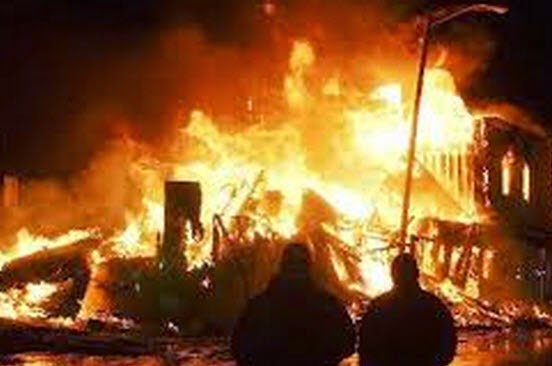
The fire, flood, hurricane or tornado that descends on a community is one kind of disaster that’s easy for the victim to recognize as such. Even an isolated event, like a pipe leak or a theft can be disastrous to a business or homeowner. The difference is those kinds of disasters are easy to recognize as such and most people realize that they must be prepared for them.

What happens to the people who then try to secure the insurance compensation they’re entitled to is, all too often, another kind of disaster. And it’s that second disaster that nobody is expecting. Literally millions of people have been victimized by the second kind of disaster after having endured the first kind. The saddest thing about it is this: most victims of the second type of disaster do not even realize that this disaster has taken place.

Think about it. If you don’t know what is covered and why it’s covered ... or how to identify and estimate all the damages you’ve sustained … or how to determine what you should actually get paid … how would you know whether the insurance company was holding back when it came to compensating you fully for valid claims?

Even if you were to figure out the insurance company was, through error, oversight, or any other reason, not paying you all it should … you would still have to convince the insurance company that you were right and they were wrong. That is not something they are particularly fond of admitting.

If you believe, as I do, that one disaster at a time is quite enough, you’ll want to consider the following words very carefully indeed: There are three things insurance companies would rather you didn’t know that are very likely to happen after the disaster.

The first thing insurance companies don’t want you to know is that no matter how well you hold up your end of the bargain, there may be extensive delays throughout the entire claim process. You will find that your calls don't go through, or you will leave a message (either via voicemail or through a message service), that never seems to get returned.
This can go on for weeks or months.

Eventually, you may be informed that some other company is “handling” the job of sending an adjuster out to look at your loss ... and you may figure out that this company, in turn, has passed the job on to yet another company. This “hand-off” phase may continue until two, three or four layers of bureaucracy are built up. Then you will learn that an appointment has to be made, an estimate has to be written, a payment has to be approved – and you will see that each step brings additional, unexpected, and incomprehensible delays.

All the while, everybody you talk to will assure you that the delay and unresponsiveness is somebody else’s fault. But no one will take action to speed up the process. Time is on the side of the insurance companies, and they know it. The idea seems to be that if they can put you off long enough, you will quit, forget about the whole business, accept whatever they offer, or (quite literally) die before they have to pay up.

The second thing insurance companies don’t want you to know is they will often deny coverage for all or part of the loss. Either intentionally or unintentionally, the insurance company will report – often wrongly – that your loss is not covered. If you’re covered for
wind damage, they may say the damage was caused by water. If you’re covered for water damage, they may say it was caused by wind.

If you’re covered for both, they may say it was caused by a combination that they can’t cover, or they may say the damage was actually caused by something else. In my experience, the rule is a reliable one. Inevitably you will be told by someone, at some point in time that your policy covers less than you thought it did.

The third thing insurance companies don’t want you to know is that they can deflect responsibility for actually paying you. Your loss may, in theory, be covered ... but you may learn (perhaps long after the fact) that you didn’t document the claim as precisely as was required, or that the adjuster was unable to tell exactly what caused the damage, or that some other problem held up processing. Typically, you may learn that someone who seems to be an employee of the insurance company actually represents an entirely different organization. When you try to figure out who’s actually responsible for delivering on obligations to you, you may not be able to track anyone down.

Again, time is on the side of the insurance company. For a shockingly large percentage of these situations, the deflection of responsibility results in people with valid claims simply walking away from the situation.

You may find out about these problems when it’s too late to do anything. You’ll listen helplessly as somebody from the insurance company explains how they wish they could pay you, but they can't because of the lapse in time (a window that nobody told you about), because of the company’s policy, because of some obscure regulation, because of a recalcitrant boss, or because of some equally creative explanation. It’s not their fault; they can’t do anything about it.

This is real. This is not something I’m making up. This changes peoples’ lives, and not for the better. It’s hard to express the level of frustration people feel when a claim is delayed, especially for such (seemingly) inexplicable lengths of time. People have other things going on in their lives. They often have medical problems. They could be moving. They have work issues. They may have family members who are in need of extra assistance. Whatever they’re facing, policyholders often reach a point where they just want to move on to the next chapter in their lives.

They get frustrated. They feel out of their element and overwhelmed by all the paperwork, all the questions, and all the details. They just do not want to deal with insurance companies anymore. They tell themselves that they really do not care how much they lose -- they just want to “wrap it all up.”

By an extraordinary coincidence, that mentality, and the delays that produce it, combines to keep the insurance companies from having to pay out a great deal of money.

People simply do not realize how much they are losing by voluntarily entering that “just wrap it up” phase of their insurance claim. All they know for certain is that they cannot stand the delay for another day. They want it over with. I can only suggest you hang in there and not give up. More importantly, the insurance companies don’t want you to know that it is your right to hire a public insurance claims adjuster that can fight for what is rightfully yours.  Last but not least, you need to know that when it comes to dealing with the aftermath of fires and rainstorms and floods, you’re not in Kansas anymore.

Mark Goldwich is president of Gold Star Adjusters, a firm that specializes in helping clients fight for what’s rightfully theirs.  For more information, go tohttp://insuranceclaimsadjuster.us/