Showing posts with label storm damage claims. Show all posts

Surprises You Can Do Without

by Mark Goldwich

Image courtesy of commons.wikimedia.org
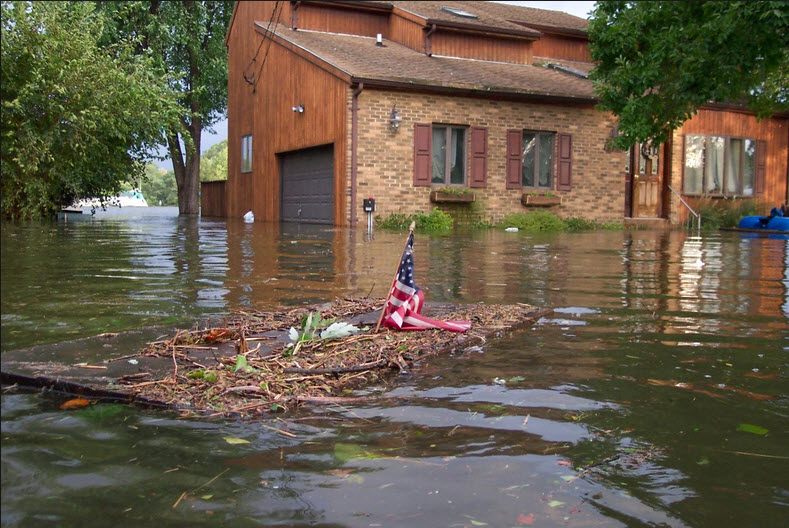
Being a fan of Weather.com, I was noticing that even though it is not making national news – whatwith the first presidential debate and Charlotte riots and all – there continues to be bad weather wreaking havoc in parts of the country you might not normally think about. Deadly flooding in Iowa, Minnesota and Wisconsin, and tornados in Indiana and Utah, seem to happen with little warning,  leaving death and destruction in their path which will be remembered for years to come.

This is happening almost a month after Florida saw damage from the first hurricane to hit the state in eleven years. Hurricane Hermine did not come out of nowhere, but as hurricanes go, it developed rather quickly, going from a depression to a category 1 hurricane within 24 hours of making landfall. Typically, these depressions are tracked for weeks, with courses predicted and severity estimated in plenty of time to allow for preparation or evacuation. That didn’t happen this time, but fortunately, Hermine wasn’t a very powerful storm, and it moved through the state and was on its way relatively quickly, so damage was not nearly severe as it could have been.

As is typical of many lower level hurricanes, most of the damage resulted from flooding, not from the powerful winds hurricanes are known for. And much of the wind damage occurred when trees, planted too close to structures, and allowed to grow untrimmed, were toppled onto homes, cars, and other property. Sometimes, people are in those homes, making for a dangerous and frightening experience. The same holds true for people trapped in homes by fast-rising waters or flash floods, given no time to escape. Regardless of the nature of the damage, once the wind has stopped blowing or water recedes, there is another frightening experience awaiting those trying to put their lives back together. We hear about it every time an event like this happens.

Image courtesy of commons.wikimedia.org
Just last week I heard from someone who had a very large oak tree land on their home after Hurricane Hermine coasted through the state capitol of Tallahassee. It wasn’t even their tree – it was their neighbor’s – but it was big enough to crush a number of roof trusses on their home which allowed water to run into their attic. It also smashed a skylight, and a kitchen vent, allowing more water into their home. They placed buckets about to catch the water streaming into the house, and spent most of the night emptyin
g the buckets as they filled up with water. Before too long, insulation in the attic got so heavy from all the water, that the ceiling collapsed onto the floor. Luckily, no one was hurt, but their home was a mess.

They promptly called their insurance company first thing in the morning to report the loss. Their carrier put them at ease, telling them a “preferred vendor” would be out to take the tree off the house and begin to clean up the mess. And sure enough, an hour later they received a call from a restoration company. This particular restoration company is nationally recognized in the insurance industry, but many people have not heard of them because they do not advertise as much as other companies. It seems they don’t need to, since insurance companies so regularly refer them to policyholders who need emergency restoration work.

This may sound innocent enough, but we have found that having this special relationship between the insurance company and the emergency restoration company can be very good for all parties, except for the policyholder – the one that is in dire need. The restoration company gets work handed to them on a very regular basis, saving potentially millions in advertising nationally every year.  By getting to the job site first, this company has gotten extremely proficient at selling themselves to the policyholder to complete all the needed restoration work, especially since they already seem to have the approval and blessings of the insurance company. This nets them even more money than the emergency work they were initially called out for.

And what does the insurance company get? They get a nationally branded contractor that will respond to their requests for assistance at a moment’s notice, and local managers with whom they develop long-term relationships. They also get preferential treatment, even compared to the homeowner for whom the work is being done. After all, it is the insurance company that pays the restoration company, not the homeowner. It is only natural then, that the relationship between the insurance company and the restoration company can result in blurring the loyalty lines. Remember, they want that flow of claims to keep streaming into their pipeline, so if they have to jump through a few extra hoops, or make less money on a job here or there to keep their “partner” happy, that’s what they are going to do, even if it comes at the expense of the policyholder.

Image courtesy of commons.wikimedia.org
So in this case, the insurance company’s preferred restoration company was on the site within a few hours of the homeowner’s call. As discussed with the insurance company, the tree was cut up, the mess dealt with, and a tarp was placed on the roof to prevent more water from entering until the reconstruction could begin. Then they began to work their magic, explaining to the homeowner that they were the insurance companies preferred contractor, and that they would write up a complete estimate for all of the damages and reconstruction estimates. They said they would help take care of everything, including helping the family relocate while the work was being done, not to mention meeting with the insurance adjuster to agree on the estimate. Within days, the insurance adjuster and the preferred vendor met, just as planned, and the adjuster told the contractor, “send me your estimate”. It all seemed to be going according to plan.

But the next day, the contractor came out again with an engineer to confirm the damages and begin the permitting process. And while they were there, the contractor first asked the homeowner to sign what is called a “work authorization”. This allows the contractor to access the property and work on the repairs – basically, hiring the contractor even though no estimate was done. While many people might not be familiar with this form, this particular homeowner was (since he himself is a contractor), and he knew this was not necessary in order for the contractor to provide the insurance company with an estimate. It was clear the contractor was not happy, and the request became more firm, with the contractor saying the form was needed for the contractor to send the estimate. The homeowner refused, and the contractor left in a huff. That was a few weeks ago, and as far as he can tell, no estimate from the preferred contractor was ever sent to the insurance company.

Fill out the form below for your Free copy.

A week later the insurance company then sent their own adjuster’s estimate, but it was woefully lacking. This comes as no surprise to me, and in my opinion, it is simply a strategy to coerce the homeowner into hiring the preferred contractor, in hopes of getting the process back on track.  By this, I mean the track desired by the insurance company and their contractor. Now it is our turn get this claim back on track for the policyholder, and that is exactly what I intend to do.

In the wake of such catastrophes, it is easy to see how people would be vulnerable in a time of calamity. They are desperate to have the damage repaired so they can get on with their lives. The thought of an insurance company working in concert with a contractor to take advantage of a policyholder that has paid a lot of hard-earned dollars for the promise of being treated fairly, is hard to believe. Still, based on my decades of experience, I’m afraid it might be the rule rather than the exception, and this example certainly seems to support my suspicions. After weathering the storm you need to be strong, and especially vigilant before signing anything. For those who know, help is just a phone call or keystroke away. And since being forewarned is forearmed, now you know.

Mark Goldwich is president of Gold Star Adjusters, a group of public insurance adjusters dedicated to helping citizens get the maximum settlement for any insurance claim.        


Miracle March Means Madness For Many

by Mark Goldwich

Forecasters predicted El Nino storms could drench the Western US in general, and California in particular, calling for a “Miracle March” that could ease the current drought conditions there. And halfway through March, it looks like they might be – predictably – partially correct.

"This is going to put a dent into some of the drought, but it's not going to take it away by any stretch," San Diego-based meteorologist Mark Moede told NBC News earlier this month. But according to Erik Ortiz of www.nbcnews.com, “the return of the storms this month in parts of California has drawn parallels to 1991, when a "miracle March" that brought record rains staved off a water shortage. It was also credited with saving the ski season.”

Image courtesy of en.wikipedia.org
In the first week of March, heavy rainstorms struck California and flooded some low-lying areas, but much more rain would be needed throughout the state to counter years of dry weather. In the second week of March, another round of rains helped replenish water reservoirs, and above-average snowfall has extended California’s expected ski season beyond any of the last several years, but it is still too soon to tell if this will be enough.

And while rain and snow is certainly good for California as a whole with regards to drought relief and snow-related industries, each storm brings disaster to many individuals. During any significant rainstorm event, low-lying areas tend to flood rather quickly. It may be that only 100 homes and businesses are affected, and this may not even make local news, let alone the national news (especially in the midst of a wild presidential election cycle), but for those 100 families, their entire world has turned to mud.

Keep in mind, also, that during most severe rainstorms, there are high winds, hail, and even tornados that come with the many inches of rainfall. Throw in a few mudslides on California hillsides, and you have the makings of a disastrous “Miracle March” for many unsuspecting property owners. The storms so far have not been devastating, but streets have been washed out by floods, highways closed by mudslides – one such slide toppled a dump truck in the process – and homes have also been flooded or damaged by mudslides. The uncomfortable paradox is that much more rain is needed to make an appreciable impact on the drought conditions, but such rains would also bring misery to ever-increasing numbers of people.
Image courtesy of en.wikipedia.org

Having dealt with so many individuals and families suffering through property insurance claims from rainstorms and flooding, I know how difficult it is to recover. Homes are damaged or destroyed, personal belongings are ruined, people are separated and displaced from their homes, and dealing with all the insurance hoops, exclusions, loopholes, and delays can bring a whole new meaning to the phrase “March Madness”.

As always, it’s important to know they can recover, and they will recover. The question is, at what cost? How much aggravation will they have to endure? How much money will they recover – or how much debt will they have to take on? Typically, the answers to those questions depend on what they know, and how well prepared are they are to take on this challenge. I always say, the better prepared you are before disaster strikes, the better you will emerge from the disaster. This goes from having a disaster plan (before it happens), to having a recovery plan (after it happens).

Fill out the form below to get your Free Master Disaster Guide.


One thing is for sure, the insurance companies all have plans. And systems. And strategies. And resources. For you to compete, you need to have these plans in place as well, even if it just means knowing who has the plans, systems, strategies and resources to help you.

Mark Goldwich is president of Gold Star Adjusters, a group of public insurance adjusters dedicated to helping citizens get the maximum settlement for any insurance claim.


Sliding Down the Slippery Slope

by Mark Goldwich

Snow Moon image courtesy of pixabay.com
Last week brought us the “Full Snow Moon”, also known as the “Full Hunger Moon”. Maybe I simply wasn’t paying close attention in the past, but this was the first time I heard each moon came with its own name, based on the month, dating back to Native Americans. With February being known as having heavy snow falls which makes hunting more difficult, it is easy to see how “Snow” and “Hunger” was connected to the name for the February moon.

Anyway, today’s forecast once again featured a weekend warning for strong winter storms, sure to bring huge amounts of the cold, wet, white stuff. Sure, it looks beautiful as it is falling, but man does it ever wreak some havoc when it lands!

So in the spirit of all the heavy snow, I wanted to point out a few ways those cute and fluffy flakes can be dangerous to all kinds of property, and how insurance companies might try to slide out from covering the damage.

Image courtesy of en.wikipedia.org
While it looks a bit like whipped marshmallow topping, snow is actually quite heavy. Accumulated snow and ice (we usually only see the snow on top, but there is usually ice underneath) can topple trees, or at least break large branches. These trees and branches may harmlessly fall to the ground, or they can smash anything they land on…roofs, fences, pools, walkways, power lines, cars, outdoor furniture and swing sets…whatever gets in the way. Trees being heavy and dense, they can really pack a wallop. I once handled a claim where a large tree basically split a 2-story apartment building in half, causing over $400,000 in damages. 

Even without involving trees, heavy snow can collapse roofs. And what do you suppose happens to the tons of snow once it gets inside the warm building whose roof just caved in? If you guessed, “melts into hundreds of gallons of freezing water and soas every last nook and cranny of a home,” you’re right!

The snow and ice can also bring down power lines that are sparked from falling trees. When damaged by trees or just the weight of ice and snow, once the power lines come down, the damage totals rise. Food spoils, electrical components get spikes and surges (before or after the outage), and temperatures inside homes drop drastically. This often makes for frozen pipes, and in many cases, as the water inside the pipes freeze, the water expands, causing the pipes to rupture. Since these ruptures take place inside of walls, they can’t be seen – until, that is, the frozen pipes thaw out and water pours from the ruptured section of pipe.

Image courtesy of YouTube.com
Snow falling on roadways create other hazards, such as reduced visibility, black ice, snow drifts, and generally slippery conditions that are prime for auto accidents. Cars then slide into other cars, or other property, making for colossal collisions costing copious quantities of cash.

As you can see, when it comes down to it, snow (in one form or another) has the ability to damage pretty much anything it comes into contact with. Naturally, the heavier the snow even, the greater the potential for damage. But that is why you buy insurance, right? Of course, it is.

But if you’ve been following my blogs at all, even an insurance novice can probably begin to formulate some of the slippery excuses some insurance companies might try to give in order to slide out from paying these claims:

“Wear and tear”
“Negligent maintenance”
“Faulty construction, defective materials, or poor design”
“Failure to maintain heat”
“Failure to drain plumbing pipes”
“Continuous and repeated seepage of water”
“Excluded power surge”
“Abandonment”
“Failure to mitigate damages”

To get your FREE copy, fill out the form below.

Heck, some might even claim you misrepresented some obscure and completely unrelated answer on your insurance application form when you initially purchased the policy many years ago. If so, they could declare the entire policy to be void, regardless of whether or not this particular loss is covered. I call this phenomenon, “Denial by rescission”, and yes, it really happens.

Even if they can’t find a way to deny the claim completely, there are always plenty of icy obstacles they can use to delay, deflect, reduce and defend their actions and your payments. All of these can frustrate weary policyholders to the breaking point, where walking away from a fair settlement seems better than continuing to engage in the mental torture an insurance claim can inflict.

Well, that got cold and gloomy in a hurry! So let’s come back around and end on a nice note, with the names of all the full moons for the entire year (according to www.farmersalmanac.com):

– January - Full Wolf Moon
– February - Full Snow Moon
– March - Full Worm Moon
– April - Full Pink Moon
– May - Full Flower Moon
– June - Full Strawberry Moon
– July - The Full Buck Moon
– August - Full Sturgeon Moon
– September - Full Corn Moon or Full Harvest Moon
– October - Full Hunter’s Moon or Full Harvest Moon
– November - Full Beaver Moon

 – December - The Full Cold Moon; or the Full Long Nights Moon

And if you ever find yourself sliding down the slippery slope of insurance company denial, remember to call your friendly pubic claims adjuster.  He knows how to cut Frosty down to size.

Mark Goldwich is president of Gold Star Adjusters, a group of public insurance adjusters dedicated to helping citizens get the maximum settlement for any insurance claim.  

Tale of the Tape

by Mark Goldwich

The phrase, “Tale of the Tape” is an old boxing saying, and refers to the physical characteristics of each fighter (age, height, weight, reach). The idea is, these numbers may predict which fighter has an advantage (assuming the numbers are not the same) over the other. This also assumes the person reading the tape measure is impartial.
Sometimes the tale you are being told depends on who is holding the tape measure. I was reminded of that this morning when a newly acquired professional acquaintance of mine said he recently went through an experience with his insurance company regarding his roof, and he was curious to hear what I thought about it.

He started, as many people in my hometown of Jacksonville, Florida do, by telling me
Image courtesy of commons.wikimedia.org
a ”roofing company” was canvassing his neighbor with fliers, doorhangers, mailings and door-to-door salesman. I asked if I could guess the name of the *”roofing company”, and out of the 50+ roofers in town, I named just two. Sure enough, it was one of those two I had just named without any additional information.

I say “roofing company” because, in my opinion, these are really more like roof marketing firms than roofing companies. They employ large sales forces, use high pressure tactics, focus on generating signed contracts to have the roof work done, and then subcontract out the vast majority (if not all of) the roof work to roofing crews who actually put on the roofs. Their main focus is to get the home’s owner to sign a contract to replace the roof, usually with the hope that their insurance company will pay for the replacement. Some even call themselves “insurance specialists”.

Oddly enough, though, some of these firms never even get on the roof to see if there is any damage an insurance company might pay for. And if they do get on the roof, they may still recommend submitting a claim to the insurance company, regardless of whether or not it is likely that the claim will be paid. Again, the focus seems to be on getting the deal signed, and a claim submitted. It’s as if they just hope the insurance company will pay the claim, and if they don’t, there’s always another neighbor whose insurance company might.

Image courtesy of commons.wikimedia.org
In any event, for this new acquaintance of mine, the claim was submitted, and the insurance company denied the claim. “Wear and tear” he and I both said together, almost as if I already knew what the insurance company would say. “How did you know?” he asked. The answer is simple - that is the most common reason for a roof denial. That is the insurance company’s “Tale of the Tape.”

He then asked if the denial was appropriate. I explained that I did not know, but there was an easy way to find out. We would look at the roof, and give our own opinion as to how that claim should have been handled. In other words, we would give him our own “Tale of the Tape.” The insurance company was either right, or they were wrong, but the bottom line is, it should not be left up to the insurance company to decide, and I think you can guess why.

As I always do, I told him we wouldn’t charge him anything to inspect the property, nor would we charge to provide our opinion as to whether or not the claim should be paid as valid. If we did not think there was covered damage that should be paid for by insurance, we would tell him, because unlike the roof marketing firms, we don’t employ salesmen to throw lots of spaghetti at walls all over town just to see what sticks. We invest serious time into our efforts, and we can’t afford to waste that time (or risk our licenses) on claims that aren’t covered and won’t be paid. And unlike the insurance companies, our profits do not suffer when claims are paid – in fact, that’s how we earn our living.

Fill out the form below for a Free Copy.

So I like to say we are squarely in between the roof marketing firms and the insurance companies. We may want the roof to be damaged by a covered event that leads to a claim payment, but there is a disincentive to us to pursue a claim that is without merit. In that sense, I believe the public adjuster’s tape is the most accurate of the three.
And as a case-in-point, I related to him a recent claim I handled for a neighbor of mine. One day I saw a roofing sign in their yard. The sign belonged to one of the two ”roofing companies” I mentioned earlier, so I asked the neighbor about it. They said the roof salesman convinced them to submit a claim, confident he could get the insurance company to pay for a new roof. After explaining why I thought it would have been better to call me first, I told them to keep me posted on the claim, and that if the roof is paid in full, they would not need to hire me.

Several weeks later I drove by and saw the roofing sign was no longer in the yard, but the roof had not been replaced either. I approached the neighbor again, who confirmed my suspicion that the insurance company refused to pay to replace the roof. “Wear and tear.” So the neighbor got me involved, and while the storm damage to the roof was relatively minor, there were factors which I felt obligated the insurance company to pay. And long story short, pay they did, to the tune of $13,000 – enough to replace the roof in its entirety.

There’s another saying that goes, “There’s two sides to every story.” I would argue that often in the case of insurance claims, there are usually at least three sides to every story, each telling their own “Tale of the Tape.” In this “tale” I showed how the public adjuster’s “tape” is more accurate because of the combination of incentives and disincentives at work in the insurance claim process.

Mark Goldwich is president of Gold Star Adjusters, a group of public insurance adjusters dedicated to helping citizens get the maximum settlement for any insurance claim.   


Chipping Away

by Mark Goldwich

Recently I had the opportunity to help a contractor on a claim involving the contractor’s own home. I met this contractor just a year or two before, but he had never referred any of his customers to me. In one of my encounters with him, we were at a business coaching event, and I seized that opportunity to again explain what we do at Gold Star. I detailed how we might be able to help him and his customers, especially those with roofing issues, as both of our companies were heavily involved in this type of work.

Image courtesy of en.wikipedia.org
So not very long after that, the contractor called and asked me to come out and take a look at a roof. It was not a customer's roof, but the roof of his own home. He mentioned he had looked at it already, and while there was some damage, he wasn’t sure there was enough to warrant putting in an insurance claim. He also noted that a few roofers had been by (not knowing what business the contractor was in), and suggested he submit a claim for the roof, (This is a very common practice here – and probably everywhere – but one I definitely do not agree with, and I’ll explain why below).

He again asked how it would work with me coming to inspect his home, if there was a cost, and would he need to turn in an insurance claim first. I assured him there would be no cost for me to take a look at his roof (and his interior water leak from the roof as well) , nor to consult with him about his options regarding any potential insurance claim.  I also reiterated that, in fact, it was better that he did not yet turn in an insurance claim. The reason I believe it is better if a claim is not already submitted, is because it gives me the opportunity to determine whether or not a claim should be submitted.

If a claim is submitted for which there is no coverage, it could present a problem for the insured when the property is inspected. The company adjuster could note a breed of dog, preexisting damage, needed repairs, a trampoline, or other element that the insurance company might elect to non-renew coverage.

And even if the claim is covered, it may not be worth submitting a claim, as the damages may not exceed the policy’s deductible. It is simply my opinion that it is better to have an expert determine whether or not a claim should be submitted for a particular loss, especially when this consultation is done at no cost.

Image courtesy of commons.wikimedia.org
So back to the contractor’s potential claim…his roof had suffered some relatively minor damage, and there was a leak on the ceiling of his dining room, which was next to the foyer. The damage on the roof was not extensive, but there was damage on more than one side of the roof,  The shingles were about 15 years old, they were not very pliable, many could not be repaired without creating additional damage to other shingles that were not damaged to begin with, and even if they could, the repairs would be fairly unsightly. On the interior, the water leak created a stain only about 1 foot in diameter, but it was near a wall which would necessitate a drywall repair,  The wall would then need to be painted, and the ceiling texture would need to be replaced.

It was not a desired scenario because the amount of damage was relatively minor, but the expense to properly repair the roof and interior would be much more significant had just a few facts and home features been different. Typically, insurance companies and their adjusters tend to dwell on this disparity between the amount of actual damage, and the expense of proper repairs. When they see damages that would only total $500 if the circumstances were different (for example, a roof that could be repaired and a leak in the middle of a small room), but are now totaling over $20,000, many of them have a hard time agreeing that the valid claim is $20,000, and not $500. I discussed the pros and cons of this particular claim with the contractor, and let him know I would be willing to pursue the claim if he wanted to go that route. However, I also let him know I felt we could be in for a battle.

But when the company adjuster came out to meet me at the property, I did not assume an attack position, or come at him with guns blazing. Instead, I guided him through the facts, calmly explaining why I felt the entire roof would have to be replaced based on the conditions present.  I even acknowledged that the damage was relatively minor in relation to the amount of repairs I was proposing. I talked to him about things we had in common – places where we worked, and people we might both know. I talked to him as a co-worker would, bouncing ideas and suggestions off him, but always coming to the conclusion that ultimately, the entire roof would have to be replaced, the ceiling would have to be retextured, and the walls repainted. He did not dispute anything I was saying, but would not commit to it all either. In the end, he said, he needed to submit his findings to his supervisor, and they would make the final determination together.

Fill out the form below to receive your Free copy.

When I told the contractor how much my estimate was for, he seemed quite surprised, and said he would be happy if he could get half that much. I told him not to worry, and before long, the insurance company was offering less than what I proposed (naturally), but already much more than half of my estimate. We eventually agreed on a number that was below my initial figure, but not by much. Needless to say, the contractor was very happy with the result, and has since referred several customers to my company. Those claims have also gone well.

The moral of my story today is to keep chipping away. I chipped away at the contractor who was reluctant to refer my service to his customers, until such time as he was presented with an opportunity to try me out for himself. Once satisfied beyond his own expectations, he felt confident in referring my company to others. Similarly, I chipped away at the opposing adjuster, taking a friendly approach to what could have easily been an adversarial situation, finding common ground and using facts and reason to lead him to a conclusion he would likely not find plausible on his own. When chipping away, you can use a chisel, a sledgehammer, or dynamite (or all three). All may be effective. Different people use different methods to chip away, but I find the chisel works best with my personality. What works best for you?

Mark Goldwich is president of Gold Star Adjusters, a group of public insurance adjusters dedicated to helping citizens get the maximum settlement for any insurance claim.   


Who'll Stop the Rain?

by Mark Goldwich

Hurricane Joaquin image courtesy of Flickr.com
The latest news has the fairly sizable hurricane Joaquin threatening the East Coast of the United still recovering from 2012’s “Superstorm” Sandy. You may recall New Jersey experienced especially devastating flooding when Sandy drenched that region.
States, even though the most current predictions are it will never make U.S. landfall.  However, a storm as big as this doesn't have to hit to produce coastal flooding by the time Joaquin exits the area. In fact, the Carolinas are already experiencing flooding completely unrelated to this hurricane, so any additional rains as a result of Joaquin will make things dramatically worse. I also noted that emergency preparations are already underway in New Jersey, which is

I will first start with this – if you don’t already have flood insurance, you should seriously consider getting it as soon as possible. It may be too late for you to be covered in the event Hurricane Joaquin does strike, but there will always be another event that causes flooding, which very few of us are immune. I have been saying for years that “we are all in a flood zone, it just may not have happened yet.” Even if the place you live is not recognized as a flood zone by FEMA or a mortgage company that doesn't mean that flooding can't occur. If you are in a “low-risk” flood zone (as determined by FEMA), your mortgage company may not require you purchase flood insurance, yet your property may still be at risk. Countless people make that mistake each and every year, with dire financial consequences. And that may never change, at least not for everyone, but if you are reading this, I hope you will act now, and not become a statistic. Another of my flood-related sayings is, “if you place too much trust in FEMA flood maps today, you may be waiting in FEMA assistance lines tomorrow!”

Here are some interesting flood facts from www.FloodSmart.gov:
  • In the past 5 years, all 50 states have experienced floods or flash floods.
  • Homeowners' insurance does not cover flood damage.
  • Just a few inches of water from a flood can cause tens of thousands of dollars in damage.
  • A car can easily be carried away by just two feet of rushing water.
  • New land development can increase flood risk, especially if the construction changes natural runoff paths.
  • Federal disaster assistance is usually a loan that must be paid back with interest. For a $50,000 loan at 4% interest, your monthly payment would be around $240 a month ($2,880 a year) for 30 years. Compare that to a $100,000 flood insurance premium, which is about $400 a year ($33 a month).
  • A Preferred Risk Policy provides both building and contents coverage for properties in moderate- to low-risk areas for one low-price.
  • You are eligible to purchase flood insurance as long as your community participates in the National Flood Insurance Program. Check the Community Status Book to see if your community is already an NFIP partner.
  • In most cases, it takes 30 days after purchase for a policy to take effect, so it's important to buy insurance before the storm approaches and the floodwaters start to rise.
  • In a high-risk area, your home is more likely to be damaged by flood than by fire.
  • Even though flood insurance isn't federally required, anyone can be financially vulnerable to floods. In fact, people outside of mapped high-risk flood areas file over 20-percent of all National Flood Insurance Program flood insurance claims and receive one-third of Federal Disaster Assistance for flooding.
  • From 2005 to 2014, total flood insurance claims averaged more than $3.5 billion per year.
  • Since 1978, The NFIP has paid nearly $50 billion for flood insurance claims and related costs.
  • There are currently more than 5.3 million flood policies in force across more than 22,000 communities in the U.S.
Image courtesy of commons.wikimedia.org
These are sobering statistics, which should make all non-insured homeowners pause to consider. It would be great if more people did know more about how flood insurance works, and who it can protect. Too many individuals and families are impacted each year simply because they got bad information about flood insurance, didn’t understand the information they were given, or didn’t have the resources to obtain the correct information. My goal would be to reach at least one person, and make a difference.

Along these lines, there was another section at FloodSmart which detailed common misconceptions about flood insurance. It was there I learned that floods are the #1 natural disaster in the country, and that many people (wrongfully) believe they are somehow not eligible for flood insurance, either because of where they live, or their mortgage status. I can’t tell you how many people have told me after the fact that they didn’t think they needed flood insurance because “the mortgage company said it wasn’t necessary.” The mortgage company probably said it wasn’t “required”, or maybe that is what they meant to say, but either way, the message was lost in translation.

The fact is, according to NFIP (National Flood Insurance Program):
  • You CAN get flood insurance nationwide.
  • You CAN get flood insurance if you live in a floodplain or high-flood-risk area.
  • You CAN get flood insurance if you live outside a floodplain, or a low-to-moderate flood-risk area, and at lower cost.
  • You CAN get flood insurance if your property has been flooded before.
  • You CAN get flood insurance from insurance agents in your area.
  • You CAN buy flood insurance even if your mortgage broker doesn't require it.
Fill out the form below to get your Free Copy.

Were you already aware of all this? If so, wonderful – you are a flood maven! If not, it might be time to do a little more research. People with accurate information about flood risks and protection options can make better decisions and plan for disasters. Sometimes the key is knowing who to ask, or where to look before the storm clouds gather and you begin to wonder, "Who'll stop the rain?"


In this article I used current weather conditions to again remind people of the need to prepare for potential disasters like flooding, and the cost of failing to do so. I also provided information from a valuable resource on the subject of flooding, www.FloodSmart.gov, and presented statistics and misconceptions to help people gauge their own levels of understanding on this topic. I hope you scored well!

Mark Goldwich is president of Gold Star Adjusters, a group of public insurance adjusters dedicated to helping citizens get the maximum settlement for any insurance claim.   

Why Buy Insurance?

by Mark Goldwich

Just this week I got asked a question I am asked several times every year. I was speaking with a woman who had recently had a water loss at her home, and she was considering whether or not she needed our assistance with her homeowners’ insurance claim. Along the way, as it tends to happen, we talked about her insurance policy, what it generally covers, and what it generally doesn’t.

While homeowners insurance policies vary from company to company, there are many similarities when it comes to coverages and exclusions. Most policies cover by one of two methods – “all risk”, which certainly sounds like it covers the insured for just that, all risks, or anything that happens. Does anyone really believe an insurance company will pay for anything that happens to your property? Of course not. What they really mean, and what you should hear (in your head) when they say “all risk”, is that the insurance company will cover you for all risks that are not later excluded in the policy.

Image courtesy of commins.wikimedia.com
If the policy is not an all risk policy, it is what is called a “named peril” policy. With a named peril policy, you are given a list of perils that are covered, and also a list of exclusions. Generally, there are exceptions to the perils, and also to the exclusions. If the event that damaged your property is a named peril, you still need to review the exclusions, but if the event is not one of the named perils, it doesn’t matter what the exclusions are – it’s just not covered.

It might surprise you then to hear both policies appear to cover similar things, such as fire, windstorms, accidental pipe leaks, and theft, to name a few.  Both types of policies tend to exclude similar things, such as wear and tear, mechanical breakdown, flood, pollution, rust, mold, repeated leakage, and more.

So what ‘s the difference?. There are two main differences. First, the all risk policy covers more items, simply because it covers the limited number of events listed in a named peril policy (and for that reason, it is both more expensive, and  it is easier to market as a better insurance product). The other difference, at least as how it has been explained to me, is that with the all risk policy, the legal burden to prove a claim is not covered is on the insurance company; whereas with a named peril policy, the burden prove a loss is covered is on the insured.

After we talked about her policy and the coverage and exclusions contained, that’s when she asked the obvious question: “Why do I even have insurance anyway?”

Image courtesy of en.wikimedia.org
There are a few answers to this question (even though it’s almost always said halfheartedly). If there is a mortgage on the property, as is usually the case, the mortgage company requires the homeowner to purchase insurance to protect the mortgage company’s financial interest in the property.  In that case, the homeowner has no choice, but it may be for the best.  If there is no mortgage on the property, the homeowner does have a choice, and a decision to make. They could purchase insurance, or not.

Most people in this situation decide to purchase insurance rather than saving the money they would otherwise be spending on insurance premiums to use that money to pay for any unexpected events that the crop up. They know it would take several, if not many, years to save enough money to cover the expense of even a relatively minor loss. And they also know a major loss, at almost any time, would leave them wholly unable to rebuild or replace everything lost.  This could mean financial ruin for them.

Ultimately, people buy insurance because they can’t afford to suffer a major loss without it. They prefer to transfer the risk of paying for such a loss to a company that is financially able to pay a large loss, or even a total loss. They can afford manageable monthly payments, and they can usually afford their deductible, but just as people tend to buy homes using a mortgage instead of paying cash, they use insurance to pay for repairs to the home instead of paying for those repairs themselves.
Even those who could afford to pay cash for their home, or who could pay cash to repair or replace their home in the event of a catastrophic loss, tend to use insurance to spread and share the cost, as well as avoiding liquidation of assets or conversion of  investments in order to generate the needed cash.
Fill out the form below for a free copy.

You see, when people ask the question “Why do I even have insurance anyway?” it’s more of a rhetorical question. They know why they have insurance, they are merely complaining about paying higher and higher amounts of premiums for lower and lower benefits. It should also be noted this question invariably comes when a claim is not being covered, or not being paid completely. No one ever asks this question after collecting $200,000 for a large loss just months into their first year of insurance when they have paid less than $1,000 in premiums. No, it usually comes after 10 years of paying premiums faithfully and then having a relatively small claim declined.


It just goes to show, whether or not we have a mortgage, and whether or not we’ve been paying premiums for a long or short time, we buy insurance just in case, for peace of mind, to hedge our bets, to leverage another financial tool at our disposal, and for any number of other reasons based on our personalities, our risk tolerance, and our desire for stability. In other words, why ask why?

Mark Goldwich is president of Gold Star Adjusters, a group of public insurance adjusters dedicated to helping citizens get the maximum settlement for any insurance claim.  

The Heat is On

by Mark Goldwich

It’s only the middle of June, but the heat has really spiked  this week in Northeast Florida, leading me to think about just a few of the insurance and home maintenance issues related to higher temperatures.

Image courtesy of ptacunitsforsale.com
First, we know that air conditioners are working overtime during the hot summer months, so whether you have central air, window units, wall or split units, now is not the time for them to fail. Be sure your AC is well maintained by cleaning or replacing the air filter regularly, or having a licensed company perform a maintenance check and do any needed repairs. The relatively small amount of money spent on regular maintenance will certainly outweigh expensive replacement costs, as well as keeping your unit running more efficiently. Our friends at DWG Inc. have a great blog at http://bestacparts.blogspot.com that can answer all your AC related questions.

If you don’t maintain your AC properly, you will usually find one of two things happen. The unit will either stop cooling your living space – this is bad; or, the unit will stop cooling your living space and leak water – this is very bad. Sometimes the leak is fairly minor, especially if caught quickly, but I have seen cases where a few gallons of water escape, damaging floors, baseboards, drywall, and even cabinetry. This usually happens when too much algae growth clogs the AC drain line, and instead of discharging water outside the home, it leaks inside the home. If you have ever watched how much water comes out of a good sized central AC drain line, you know that in just a few hours, you can be dealing with tens of thousands of dollars in damage. Or, depending on the insurance company adjuster you get, you could be told it just needs some minor drying and cleaning. Sometimes it’s just a matter of perspective.

Image courtesy of en.wikipedia.org
Hot summer weather also seems to bring more frequent and violent afternoon thunderstorms, often packed with high winds, lightning, and heavy rains. While you can’t do much about the weather, there are things you can do to minimize potential expenses.  Be sure your roof is in good condition by either checking it yourself, or hiring a roofing professional to do this for you. If there are excessive leaves and twigs on the roof, clear them off (I was recently on a roof that had so much leaf debris on it, that the debris was decomposing into a soil-like substance, and was now growing weeds out of it – I asked them for a broom and swept off several trash bags worth!).  If roof vents or other components have rubber seals or tar caulking, check those for weathering cracks and do needed repairs. Especially beyond 10 years, the hot sun can wreak havoc on roofs.

Check your gutters and downspouts for debris that will prevent them from moving water away from your home’s foundation. Keeping water away from your foundation is always a good idea. This is why your yard should slope down as it gets further from the foundation, and why you should not plant shrubs too close to the exterior walls. Since gutters and downspouts are made to move water away from the foundation, this only works if they are kept clear of debris. Exposure to water, especially repeated and prolonged exposure to water, is not good for a home’s foundation. It could cause erosion or compaction of soils which could damage your slab or foundation, seep into your home through minor cracks, and create mold conditions in and around your exterior walls.

Image courtesy of en.wikipedia.org
You can trim back large tree limbs that are hanging over your property, or remove dead trees altogether. It might surprise you how a relatively small tree limb falling onto your roof can create a much damage a normally looking tree can do when it crashes through your roof and into your living room! And while these events should be covered by your homeowners insurance, with the way deductibles are rising, it might be a lot cheaper to just do the maintenance.

Too many days of torrential thunderstorms can cause localized or widespread flooding, as thousands of people in Texas can attest. Even if your home is not directly affected, you could be required to evacuate your home for days at a time (as inconvenience as this is, it sure beats being directly affected by flood). Look into purchasing flood insurance if you do not already have it. There is very little that can be done to prevent flood damage, but having flood insurance is probably the best start in terms of minimizing your exposure to this disaster. Take a look at www.FloodSmart.gov for more information on buying flood insurance or taking other steps to reduce the impact a flood can have on you, your family, and your property.

You can buy surge protectors to prevent electronics from being damaged by lightning and power surges. When lightning strikes your home, many of your electronics can be damaged, costing thousands of dollars to replace (and as ever-increasing numbers of electronics have more and more digital components, it is rare that these can be repaired following a strike or surge as they once were.) As inexpensive as surge protectors are, they can more than make up for the expense of having to file a claim following a lightning strike or power surge.

Lightning strikes can also be a source of home fires, just as they are a source of brush fires. Be sure your smoke detectors are working, have the proper fire extinguishers well placed (and know how to use them), have a fireproof safe for your most important documents and valuables, and have an emergency plan (and a recovery plan) the whole family is familiar with.

Image courtesy of commons.wikipedia.org
Summer heat also means a lot more time in the pool (if you have one), or at someone else’s pool (if you don’t). This again means more maintenance if it’s your pool. Pools increase the chance of accident. You may want to check the chemical and PH levels more often, check and maintain the pump and filter, be sure everyone knows how to swim.  Just as public pools provide a lifeguard, make sure a responsible adult is present at all times when children are in or around the poo;.

Home maintenance and loss prevention is a lot like insurance – you pay a little now to avoid having to pay a whole lot later, and in the meantime you can enjoy some peace of mind while getting more sizzle out of your summer.

Mark Goldwich is president of Gold Star Adjusters, a group of public insurance adjusters dedicated to helping citizens get the maximum settlement for any insurance claim. 


Documentation Cubed

by Mark Goldwich

Image courtesy of LinkedIn.com
Everyone knows when it comes to real estate there are only 3 things that matter – location, location, location.  Similarly, when it comes to insurance claims, the key is documentation, documentation, and you guessed it, documentation.

I can do several blog posts on subjects like, “The 5 most common mistakes made by policyholders". But when you boil it all down, many of those mistakes can be avoided if you start with documentation. Now, I can tell you the word “documentation” can mean different things to different people. We all know the person that takes their shoe box overflowing with random receipts and bills to their accountant on April 14th and proudly says, “There’s my documentation, all organized for you!”

Sure, the accountant can fix it, after filing an extension for that person, and a little cursing, but he or she will probably charge more for all the extra time it takes sorting out that mess. So, when we talk about documentation, we are really talking about documentation that is organized and meaningful, not just random, illegible bits of information.

At the start of every claim, I recommend people get out a legal pad, so they can keep track of every conversation and activity that relates to the claim, and keep it in chronological order. Start by noting the time and date of the loss, what happened, what was damaged, and other relevant details (maybe other parties were involved, where it happened, how, etc.). Make detailed notes of every phone conversation (especially those with the insurance company adjusters), appointments with adjusters, contractors, etc., other activities related to the loss, and of course you want to record what has been damaged or destroyed.

For property claims, this can usually be broken down into 2 main areas: structural damage, and
Courtesy CDC.gov
damage to personal property. Most people have a tough time detailing structural damage. Simply do your best to take photos or video. And when it comes to personal property, especially after a large loss like a fire, tornado or hurricane, this can seem especially overwhelming. My suggestion is that you tackle the task the same way you would eat an elephant – one bite at a time. Start in one room, and move to one corner of the room. If needed, zero in on one piece of furniture, like a dresser, and focus on the top left drawer, and continue methodically from there. I recommend you do this for no more than 60 minutes at a time, taking a 15-30 minute break. You may wish to hire a company to help you with this task.

Depending on the size of the loss and your abilities, hiring someone to help document a large personal property loss could well be worth it. I have personally seen clients so stressed out by the event that damaged the property, that the thought of documenting the loss was more than they could bear. They would rather walk away from tens of thousands of dollars than risk their very sanity.

Needless to say, if you are really up on your documentation, you already have a complete inventory of everything in your home, complete with description, date and place of purchase, photo, receipt, owner’s manual, etc., before the loss ever even happens. Just be warned, your insurance company may believe such attention to detail and foresight suggests the loss was planned. Sometimes you just can’t win!

In addition to the legal pad, you might want to use a folder or binder to keep related bills, estimates,
Courtesy of mentalfloss.com
receipts, letters, and other documents you obtain or produce during the claim aftermath. If these items are not dated when you receive them, place the date you received the document on them* and try to maintain them in chronological order.

*Note: some attorneys might advise against writing directly on a document you did not personally create. I am not an attorney, and I am not giving legal advice here, but in my experience, if you can explain what you wrote, when you wrote it, and why you wrote it, you should be fine. And by all means, when in doubt, ask an attorney.

The point is, in addition to maintaining your documentation, and categorizing your documentation, sometimes you need to document your documentation.  You also need to understand your documentation. This can be difficult, especially if the documentation is handwritten with poor penmanship and grammar, or is of a technical nature.  Whoever is providing the documentation needs to understand what it is they are giving you, and they should be willing to explain it to you. This is where that legal pad comes in handy again. If you don’t understand what the documentation says, how are you going to explain it to someone else?  If no one understands it, what good is it?

Fill out the form below to receive a free copy of Mark's book.


So, there you are, taking notes of every conversation you have with every person related to the claim in any way.  You are keeping every related document in order, and you understand what they mean. You have a list of everything that is missing or damaged. Now, when your adjuster asks you to prove your claim to them, you can make it all but impossible for them to do anything but pay your claim promptly and fully. And if they don’t, you have everything you need to take matters to the next level, whatever that may be.

From boston.barstoolsports.com
It may sound like a good deal of work to document your claim, but just think about what happens if
you don’t – that is the stuff “5 most common mistakes” lists are made of. The stress, heartache and financial repercussions from failing to document your loss can be tremendous, and trying to document and organize everything after the claim starts to go south can be more work than doing it to begin with.


Documenting and organizing from the start, and consistently throughout, will take much of the stress out of the process, leaving you more confident and comfortable with everything that is happening. It can be the difference between feeling like a victim, or feeling like you are in control. 

Mark Goldwich is president of Gold Star Adjusters, a group of public insurance adjusters dedicated to helping citizens get the maximum settlement for any insurance claim.